
Spray foam is a material choice that needs a clear plan. Talk directly with a qualified installer about the area you want to improve, the existing conditions, and whether the proposed application suits your home.
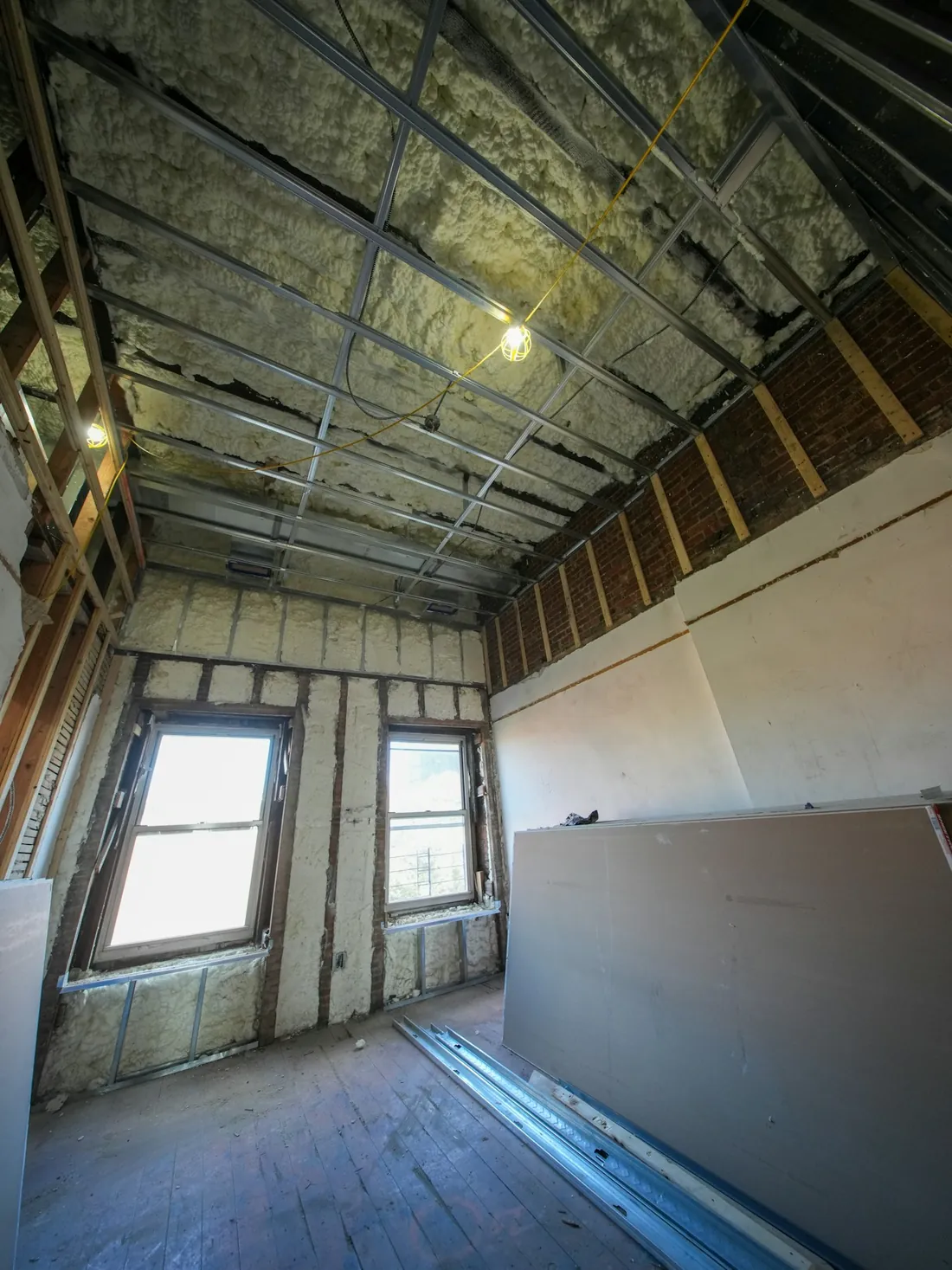
Spray foam shown during a home renovation.
The first question is where and why spray foam is being proposed. We review the existing conditions, explain the intended work, and discuss how the application fits with the rest of your attic project.
Understand the part of the home included in the proposal and the purpose of the application. The scope should be clear before work begins.
Access, the existing materials, and the condition of the area help shape the approach. Discuss what preparation is needed for the proposed work.
An insulation material is part of a larger assembly. Air leakage paths, ventilation, and related details remain part of the conversation.
Some spray foam products can provide insulation and air sealing when appropriately specified and installed. The product, thickness, continuity, and connections to the surrounding assembly all matter.
We explain the proposed work for the area being treated. The recommendation starts with your home and the application, rather than a promise that one material solves every attic concern.
The specified product and its intended installation determine its role in slowing heat transfer.
Continuity and connections matter. Other unaddressed leakage paths may still need attention.
The proposal should fit the existing assembly, including its ventilation arrangement.
You deal with the same qualified installer from inspection through the insulation work. Keep your questions about the proposal, preparation, and project arrangements together.
Ask which product and area are included, what the application is intended to do, and how it relates to the rest of the attic work.
Discuss access, the existing material, and any preparation needed. Your installer can explain the sequence and the scope before the job starts.
Review product-specific directions for access, ventilation, and re-entry. These arrangements should be understood before the application begins.
Start with the area you want to improve and what you already know about your home. If you are comparing insulation options, we can discuss the proposed approach and the next step.
No. Spray foam is applied as a foam that expands and cures. Cellulose is a loose-fill fibre material installed with blowing equipment. They have different properties and installation methods. The choice depends on the area being treated and the requirements of the assembly.
No single approach suits every attic. The existing conditions, the area being treated, and the planned work all matter. We explain the proposed application and related considerations before recommending how to move forward.
Air-sealing performance depends on the product and how it is installed, including its connections to the surrounding assembly. We discuss the area being treated and any related leakage concerns rather than assuming one application addresses every gap.
Access, ventilation, and re-entry arrangements need to be discussed before work begins. Follow the specific product manufacturer’s instructions and the project arrangements explained by your installer. We do not apply one generic re-entry time to every product and job.
Cost and timing depend on the proposed material, the area being treated, preparation, and the agreed scope. Share your city or area in the GTA and a description of the project so we can discuss the next step.
You speak directly with a qualified installer, not a salesperson. Eco Logic is a family-owned business with more than 13 years of experience. The same person stays involved from inspection through the insulation work.